May 4, 2023
Learning in Remotion: Design in an early-stage US startup
Learning how to create high-craft products.
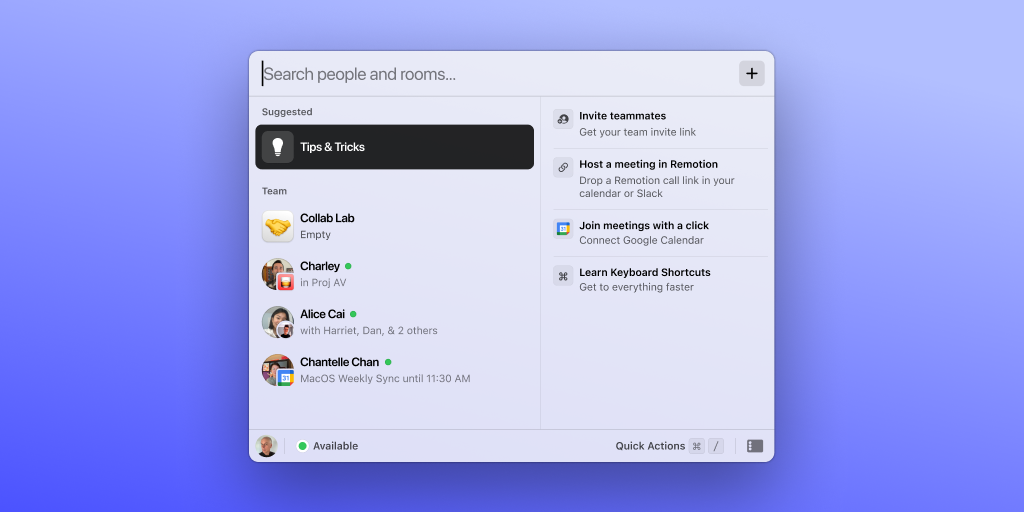
After a little-less-than-6-month spell in the series A, US-based startup, I was let go from Remotion in a company-wide layoff last November.
Even though I was devastated by the decision, I had this eye-opening chance to work for this top-tier, 20 people-strong, early-stage startup that’s straightly built from the Silicon Valley culture. From day 0, I knew that this was a rare opportunity and it definitely lived up to its name.
As a team formed by both experienced folks from the big tech and heads-down early-stage startup hustlers like me, I always knew we were a great team, and the work we do every day constantly inspires me. However, it took me quite a while to fully realise just how good we were as a team and the quality of our work.
In this blog post, I want to share some of the key lessons I've learned during my time at Remotion, some as a product team, and some as a designer. All these have contributed greatly to my personal growth and, more importantly, have helped me get to where I am today.
About Product
Having deep clarity of whys
At Remotion, we approach everything we do with great clarity. Whether we are starting a new project, onboarding a new hire, launching a research campaign, or choosing a new tool for a weekly sync, we always have a clear understanding of why we’re doing it and why we’re doing it in a particular way.
It sounds simple, yet it can be difficult for many of us. We often get lured into ongoing conversations, forgetting where we’re and why we’re talking about a particular topic. This can lead us to lose sight of our original thoughts and ideas.
One simple but powerful technique we always used was to zoom out. Were you stuck on a design decision? Zoom out to the Figjam file where we thought about the ideal user experience. Were you frustrated with your workload and not sure where to focus? Zoom out to figure out what your team was trying to achieve and where your strengths overlapped. When you zoom out, you tend to ask the right questions, and the right questions lead to discussions that unblock us.
The power of having great clarity not only allows us to turn high-level whys into action items but also helps us use high-level whys to inform our decisions when we get stuck at the surface level, like which button should be more prominent.
In the fast-paced environment of an early-stage startup, we always have to make decisions without the luxury of waiting for an answer. We ship quickly and iterate on it. With a clear understanding of why we're doing what we're doing, we are empowered to identify, evaluate, and reflect on every decision we make.
With everything clearly written and conveyed, we are allowed to act critically. And being critical helps us to get where we want faster.
Embracing changes
Before joining the company, I thought we had pretty much figured everything out. I mean, this is the big league compared to what I did before, this is the place I dreamt of working in.
But as turns out, every early-stage startup goes through a similar stage, no matter how well-funded you are or if you're living on protein bars. All we want is to create an innovative product that people love and be able to grow the company with it. Jupitrr never really found Product-Market-Fit, and neither did Remotion. However, there's a big difference in the process.
When we first started Jupitrr, we were solution-driven rather than problem-driven. We didn't spend a lot of effort figuring out if our solution was a useful answer to the question. We went straight to building the thing we wanted to build, because building is exciting. Whenever we hit a roadblock, we came up with micro-level reasons to rationalize ourselves but never circled back to the high-level decisions. Subconsciously, we didn't want to be left with nothing, and we had been avoiding that brutal conversation until almost two years went by.
In Remotion, we held on to evidence and avoided emotional feelings. When I joined the team, we started as a virtual office, helping people connect while working remotely with a sense of togetherness. We loved our product, a lot, given that we used it daily in our job. It was sleek, high quality, craft-driven and user-friendly. But the traction was never there. We didn’t see the exponential growth we were looking for. And immediately, with the clarity we had from user research and countless discussions, we decided to pivot.
The pivot with Remotion was a decisive and reassuring move. We stayed focused on problems and evidence, avoiding the influence of emotions that could have clouded our judgment. We were willing to make tough decisions when necessary, and we were confident that we were on the right track.
“In startups, we never stop figuring out. If we stop figuring, that’s the time we stop growing.”
Iterate everything and do it fast
When we knew that a change was necessary, we approached the situation with a sense of urgency and a willingness to make tough decisions.
We halt ongoing projects and refined our approach and high-level goals. We knew that we needed a fresh perspective, so we brought the team together to brainstorm and decide on our new roadmap. We switched to a project-based setting, which allowed developers to work more efficiently and flexibly. We dropped features that no longer served our new positioning and got in touch with our power users to inform them of the changes. We were willing to lose users who came to us for the original positioning because we knew that the changes were necessary to achieve success.
The change felt immediate, and within a few weeks, we had completely reimagined our product.
We made tough decisions and navigated a chaotic situation, but the leadership team played a crucial role in making the pivot feel calm and well-reasoned. They provided a clear direction and supported us every step of the way.
I believe our impressive ability to propose and adapt changes at Remotion came from having deep clarity and bravery. In an early-stage startup, we couldn't afford to wait around and hope for the best. We needed to be proactive and take risks to stay ahead of the game. Our willingness to make tough decisions and take action was crucial.
And when it’s done right, it feels so much better than working on stuff that’s going nowhere.
About People
Focus on people, and what they care about
In the first week in Remotion, my design manager, Sam, asked me a question. He said, “One day, you will leave Remotion. When you do, what do you want to take away from this experience, and how can we help you get where you want to be in two to five years?” I was shocked and thought, “Wow, are you allowed to say things like this? Isn’t every manager just hoping to keep their people around as long as possible and avoid the topic of quitting?”
Instead, we were just plain honest and embraced the reality of job-switching or in my manager's words “jumping into brighter, bigger things”. This candidness inspired me and I thought, they cared about us individual and not just see us as mere tool for the company's benefit.
Back to the original conversation of career growth, Sam introduced me to a simple yet powerful career framework. The first document was the Career Doc, which helped me reflect on my personal goals, skills, strengths, areas for growth, and values. The second document was the Role Definition Doc, which was even shorter but listed three high-level themes and assigned a percentage to each theme, indicating how I should allocate my energy.
Both docs are very simple but extremely powerful throughout my time in Remotion and even after I left the team. They provide clarity on self-reflection. When I first tried drafting the Career Doc, it felt blurry. Especially coming to a new role, you started thinking, “Now I got in, and where do I go from here?” And that’s the exact reason why those vague thoughts needed to be written down. So we can come back every now and then, to check up with the manager and ensure that my everyday tasks are aligned with my career goals and role.
They also helped me focus on fewer things and prioritize my efforts. It is easy to lose focus when you want to grow too many things and contribute to the team in every aspect. To be productive, and really good at something, I learnt that we have to pick our focus.
Also, it heals imposter syndrome. I often felt anxious and inadequate to join the team from “the outside world” with little experience. But Sam always reminds me to revisit to the doc during our 1:1 and reflect on the process we made. Celebrating small wins along the way, might not necessarily solve the root of my imposter syndrome, but I was able to regain my confidence and overcome moments of doubt.
This is just one of the many reasons why I believe that Remotion was a truly people-driven company. While the flexible working hours, unlimited PTO, and other flashy perks were great, and the frequent game day, off-site, and show-and-tells were fun and enjoyable, what truly made a difference was the care and support of the team and manager. They fostered trust, provided a safe space for honest feedback, and worked collaboratively with me to craft a meaningful career path that aligned with my personal growth goals.
Nothing beats having someone lift you up, even if you may leave in a few months. It was an incredibly fulfilling and heartwarming experience.
About Design
Design craft and hold the quality bar
One area for growth that I identified was my design craft. I wasn’t from a graphic background and I always feel I lack the artistic talent to come up with amazing visuals like a brand designer does. I used to settle for "good enough" designs in the interest of efficiency.
However, when I joined Remotion, I quickly realized that the company held a high-quality bar for visual design. We spent a considerable amount of time brainstorming and discussing visuals, layout, and direction. Since we were designing a macOS app, we had to strike a balance between Apple's design principles and our own brand identity.
This attention to detail didn't just happen during design sessions; it extended to front-end development as well. When I was redesigning the macOS onboarding journey, I created this sleek card design layout which includes a header, a paragraph and CTA. To ensure that all the cards looked great and conveyed the intended message, my co-founder and I spent a few hours trying out different copywriting. After I handed off the design to our developers, we noticed that even though they developed it pixel-perfect, the text didn't look identical to my design.
In the past, I would let this discrepancy slide, but at Remotion, we held ourselves to a higher standard. After some investigation, we discovered that the character spacing for the macOS font we were using in Figma wasn't the same as the one in our codebase, and we fixed it.
This level of attention to detail and the willingness to go the extra mile to achieve a high-quality bar motivates me to spend more and more time polishing my designs, transforming them from good designs to great ones.
Be opinionated, frameworks only get you so far
When designing an innovative product, there is no playbook for design. With no competitors doing the exact same thing, and no well-researched best practices, it's up to the designer to pave the way.
At Remotion, we had this dock that shows the faces of your team, their availability, status and serves as an entry point for quick calls or joining co-working rooms. It’s a brand-new design artefact that requires a lot of ideas, creativity, and iterations to get the user flow and interaction design right.
One of the things I learned during this experience is that as a designer, you have to be opinionated. You must make bold design decisions and defend them when necessary. I remember one conversation after presenting some of our findings and hypotheses, where I was asked, "Yes, all of this makes sense, but what do YOU think we should do?”
Frameworks and processes can help you make better decisions, but they only take you so far. It's up to us as designers to apply our creativity and imagination to create experiences that no one knows better than us. No one has the right answer, and sometimes you got to trust your instincts.
We own our work, as well as the results. We own the successes made by our great decisions and the mistakes we make along the way. And we all know that mistakes pave the path to success, not by always making the "safer" choice.
At the end of the day, it's not about passing the ball around, but about scoring goals. Be opinionated, take risks, and create something truly innovative.
Share work early, get there faster together
While we invested in improving our design craft, we recognized that as a startup, speed was critical. To balance efficiency with quality, we developed a workflow that allowed our designers to share their work, get feedback, and collaborate on next steps. As a remote team, we lacked the luxury of tapping someone's shoulder and asking for feedback, so we had to be intentional about creating opportunities for collaboration.
Our typical week as a design team looked like this: On Mondays, we had a 30-minute Design Sync where each designer discussed their priorities, gave context, and shared team-level items. Then on Tuesdays and Thursdays, we had one-hour design sessions where each designer took turns diving into their design, asking for feedback, and figuring out the next steps. In addition, we shared brief asynchronous updates on a Slack channel with screenshots of our work, allowing those outside the design team to get an idea of what we were working on.
Some might argue that this approach was too much for a four-person design team, but I found it to be effective for quick iterations and powerful for driving our momentum. This format encouraged us to share our work early, even if it was just a rough concept or brainstorming wireframe, to get buy-ins and feedback on high-level directions. This approach saved us time and prevented us from wasting effort polishing something that might change down the road.
Feedback is your best friend, but be careful
Feedback can help you make better decisions and build better products. However, it's important to be careful, as it can be overwhelming at times.
If you ask for feedback from two people, you'll most likely get two aligned directions. But if you ask ten people, you might end up with six different approaches, ideas, or directions. It's easy to get lost in so many opinions. Remember that feedback is supposed to help you, not overwhelm you.
It's important to maintain clarity and confidence in your thinking. Don't be afraid if not everyone agrees with your decisions. As the designer driving the project, you're equipped to make the best decisions, and you should trust your judgment. Design is never a place to satisfy everyone.
Don’t be afraid to break the pattern
In visual design, it's common practice to have design patterns within a design system. This system is designed to help create coherent design efficiently, especially when multiple designers are working on the same product.
But sometimes, in order to get to where we want, we have to break the patterns. We’re on a mission to constantly improve design, no decision should ever be finalised. When it comes to deciding between the best experience and following old patterns, don’t be afraid to propose new changes and challenge the system.
Yes, while it may be different in larger tech corporations like Facebook and Amazon, where the process of making changes may be more complicated, the mindset is the same. We should encourage creative thinking, thinking outside the box, and not being bound by the system we created for ourselves.
This reminds me of my experience during my master's studies when we were prohibited from using Post-it notes. Sometimes, we get so used to relying on a certain tool or method that we forget to explore new and creative ways of solving problems. By breaking the pattern and trying something new, we can unlock new opportunities for innovation and creativity.
Final thought
The idea of writing this blog has been on my mind for a few months, and I never expected it to turn out to be the longest blog I've ever written. I'm surprised by how much I've absorbed and reflected on in such a short time with the team. Some final thoughts to top it all of the learnings for me,
At the end of the day, product design is a continuous journey of growth and discovery. You’re here because you’re good at it. And great things take time, sometimes results can be daunting but we always go again.
Lee
4th May 2023
Toronto, Canada